

Summary
Good IT services for healthcare organisations aren’t about fixing computers when they break. It’s about keeping patient data safe, keeping clinical systems online, and staying compliant with Australian privacy and health record law. This article looks at what that requires, and what a recent breach in general practice can teach the rest of us.
In This Article
- What Should I Look for in an IT Provider for my Healthcare Organisation?
- What Should My IT Provider Have In Place?
- How Do I Know My IT Setup Is Built For Healthcare?
- Does My IT Support Include Cyber Security as Standard?
- What Happens When Patient Data Isn’t Protected?
- What should I ask when choosing an IT provider for my healthcare organisation?
- The Bottom Line
I’ve been in a lot of clinics where the practice manager can rattle off last month’s patient satisfaction score without blinking. It’s only when I ask about their last data restore that the conversation slows right down.
Not because they’re careless. Because they’ve never had a reason to ask their provider that question.
The IT provider picks up the phone when it’s called, backups run overnight, tickets get closed, the basics of IT support for medical practices anywhere. But IT services for healthcare organisations aren’t about closed tickets. They’re about whether that same provider knows what to do the second Bp Premier drops out mid consultation. Or a referral goes missing on its way to a specialist.
Most providers have never had to answer that one either. Healthcare isn’t the same as a general professional services business. When the system goes down, it’s a patient waiting on a result, a doctor with no history in front of them, a referral that never lands.
That’s the gap that matters. The difference between a setup that’s just getting by, and one that’s built for what a clinic needs to keep running. Knowing which one you’ve got beats hoping for the best.
What Should I Look for in an IT Provider for my Healthcare Organisation?
You need a provider who understands clinical workflows, secures patient data to a defined standard, keeps systems running across every location, and stays on top of Australian health data compliance, not one who’s applied a general business template to my clinic.
Managed IT services for healthcare, or IT services for medical industry more broadly, aren’t a different tier of the same product, they’re built around a different set of consequences.
What Should My IT Provider Have In Place?
Five things I’d want confirmed before trusting a provider with a healthcare environment.
5 Non-Negotiables for IT Services in Healthcare
- Clinical systems stay live through every appointment, Bp Premier and MedicalDirector included.
- Patient data encrypted at rest, with access logs and a defined breach response built in.
- Telehealth that securely connects a patient in Cooktown or Weipa with a specialist in Cairns without a hitch.
- Compliance built into daily monitoring, shaped by the Privacy Act and My Health Record requirements.
- The same standard across every site, Cairns, Townsville, or smaller regional clinics.
How Do I Know My IT Setup Is Built For Healthcare?
A quick way to check is whether your provider understands the clinical software I run and the compliance obligations attached to it, not just my network.
Does my current provider know what Bp Premier or MedicalDirector is, or have they just been told to keep the computers running? Do they know what happens, procedurally, the day a breach occurs? If neither answer comes easily, that’s worth knowing now, while there’s still time to fix it.
This is where managed IT services built for healthcare teams look different to a general business contract, shaped around what my clinic depends on. And they’re the reason I can stop carrying that question around unanswered.

Does My IT Support Include Cyber Security as Standard?
Managed IT for healthcare should include a security baseline as standard, protecting patient data, maintaining uptime, and supporting compliance obligations, not as something bolted on separately once a gap’s already been found.
Security shouldn’t be a conversation that starts after something’s gone wrong, it should already be part of what keeps a clinic running.
What Happens When Patient Data Isn’t Protected?
Here’s what happens when patient data isn’t protected as a standard part of the IT support keeping a clinic running, not a hypothetical, an actual case from earlier this year.
What happened at Partnered Health
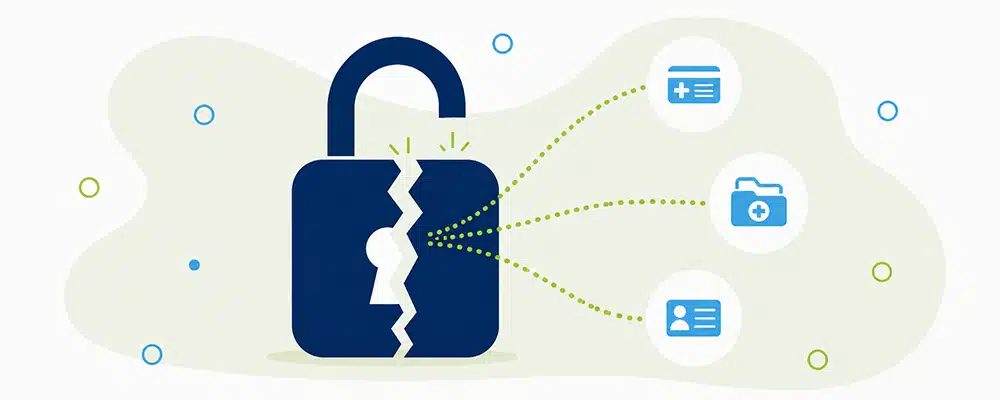
In June 2026, Partnered Health, a national network of general practice and skin cancer clinics across NSW, Victoria, Queensland, WA, and the ACT, had patient names, dates of birth, Medicare numbers, health insurance details, consultation notes, referral letters, and pathology results accessed and later published online. Patients weren’t notified for more than three weeks.
A password can be reset. A Medicare number, medical history, or referral trail can’t. Once stolen, they can be used against a patient indefinitely, and convincingly enough that a scam call sounds like part of their ongoing care.
That’s what’s at stake when security isn’t built into a clinic’s IT from day one. Cyber security for healthcare shouldn’t be a conversation that starts after something like that happens, it’s part of what managed IT for healthcare needs to include from the start.
I’ve seen the other side too. How Gidgee Healing strengthened their cyber defences before anything went wrong, building security in rather than reacting to a scare. That’s the version I’d rather see more of.
What should I ask when choosing an IT provider for my healthcare organisation?
A short list of direct questions will tell me more than any sales pitch.
A few I’d ask outright, and expect a straight answer to, because walking away with real answers is what settles the question.
- Do you have real experience with clinical software like Bp Premier or Cliniko?
- What’s your process if a breach is suspected?
- How do you handle compliance reporting under the Privacy Act and My Health Record requirements?
- Do small medical practices need a dedicated IT provider?
The Bottom Line
None of this is really about technology. It’s about a patient’s information, and the trust they’ve placed in an organisation to look after it. Is it protected against exactly what happened to Partnered Health’s patients in June 2026?
The practice managers I’ve spoken with aren’t careless. They’ve simply never had a reason to ask their provider whether a Bp Premier outage has a documented response, or whether a breach notification obligation under the Privacy Act has been tested rather than just written down.
It’s worth asking that directly. And finding out what managed IT services built for healthcare teams covers for an organisation like yours, so you can feel confident in hat you’ve got.