

I’ve lost count of how many times a client’s told me “we’ve got antivirus, we should be right,” and hadn’t checked that in years. You know cyber security matters. What you don’t know is whether what you’ve already got covers it. Is it enough, or are you hoping it is? Let’s find out.
What Cyber Security Solutions Does My Business Actually Need?
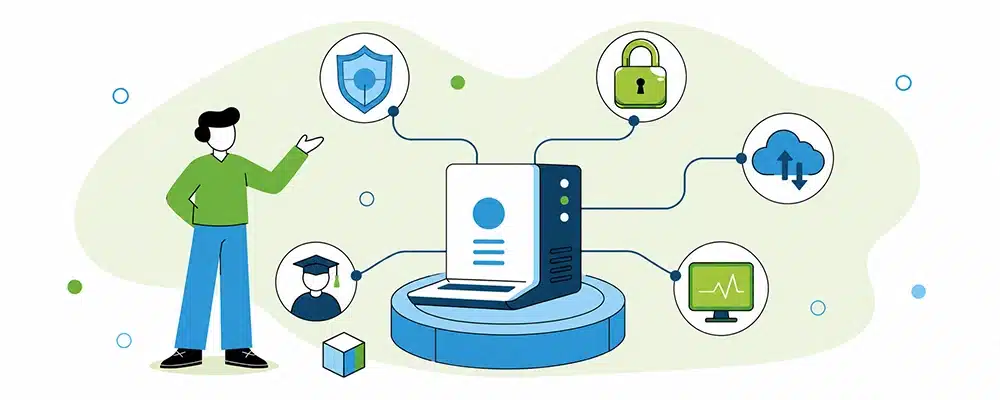
The essentials are layered protection, staff training, monitoring, and backups working as one system, not scattered tools bought separately.
The threat landscape shifted because attackers now use the same automation everyone else does. What counted as adequate two years ago probably doesn’t now. Papering over the cracks with a single antivirus subscription isn’t a plan, it’s placing a bet.
Is Managed Cyber Security the Right Approach for My Business?
Yes, if you’re under 200 seats. It’s the only practical way to get proper coverage without hiring an internal security team.
Managed cyber security means someone is actually watching your systems, not just installing software and walking away. It covers monitoring, patching, and a response plan ready if anything gets through. You’ll get this same coverage whether you’re in professional services, a nonprofit, or an Aboriginal healthcare provider across Cairns and Townsville, through Future IT cyber security services.
Proof It Holds Up
One healthcare client had an attack blocked mid-rollout of new monitoring, before it reached a single patient file. That’s the gap this closes, not just locking the front door and leaving the back one open.
What Cyber Security Trends Should I Know About in 2026?
The trends that matter most are AI working both sides of the fight, tighter cyber insurance requirements, and rising demand for staff training.
None of these are enterprise-only problems anymore. If you’re still running on the same setup as five years ago, AI has already turned it into a moving target.
- AI, working both sides. It sharpens phishing for attackers and detection for your cyber security solutions. Standing still on last year’s setup makes you an easier target, not a safer one.
- Tighter cyber insurance requirements. Insurers are tightening what they’ll pay out on, often requiring proof of basic controls first.
- Rising demand for staff training. Most incidents still start with a click, so training keeps climbing the priority list. The commercial case for acting on all three sits in 10 top benefits of investing in cyber security, and cyber.gov.au tracks how the guidance shifts as threats do.
How Much Will Cyber Security Solutions Actually Cost My Business?
Expect to spend between $1,500 and $6,000 a month if you’re in the 20 to 200 seat range, depending on complexity.
That range moves with device count, number of sites, and whether you’re building from nothing or already have a managed IT provider. A single-site professional services firm sits at the lower end, a multi-site nonprofit with remote staff sits higher.
What Will Cyber Security Actually Cost Me Per Month?
At the lower end, expect $150 to $300 per seat per month for baseline monitoring and protection.
That figure usually covers monitoring, patching, and basic response, bundled in with Future IT managed IT services rather than sold separately. Layer on staff training or compliance reporting and the number moves up. Paying for peace of mind, not a product, is the right way to think about where that money goes.
Is Cheaper Cyber Security Actually Worth the Risk?
Usually not. Cheaper packages tend to skip monitoring and response, the two things that actually stop an incident becoming a disaster.
The real cost of underinvesting shows up afterwards, in downtime, data recovery, and notifying clients under the Notifiable Data Breaches scheme. A cheap plan covering antivirus alone looks fine until something gets past it, and then you’re waiting for the phone call telling you it has.

What Should I Look for in a Cyber Security Provider?
Local presence, fast response times, and genuine understanding of Australian privacy obligations matter more than a longer list of certifications.
A certification list looks much the same from provider to provider. What separates them is whether they show up when something breaks and understand the obligations specific to your industry.
Does Location Matter When I’m Choosing a Cyber Security Provider in Australia?
Yes. When something goes wrong, a provider who can be on-site the same day matters more than a lower price interstate.
Cyber security support happens remotely most of the time, but not always. When a server needs replacing or a breach needs physical containment, remote access has limits, and a local provider understands the regulatory environment you’re in. Future IT cyber security services have supported businesses across Cairns, Townsville, and Mount Isa for this reason.
The Bottom Line
You came here asking whether what you’ve already got is enough. Now you’ve got a proper way to check that, instead of guessing. Cyber security for a business your size isn’t scaled-down enterprise leftovers, it’s layered, proportionate, and more accessible than you’d think in 2026. If you want a straight answer on where your setup stands, Future IT cyber security services is worth a look.